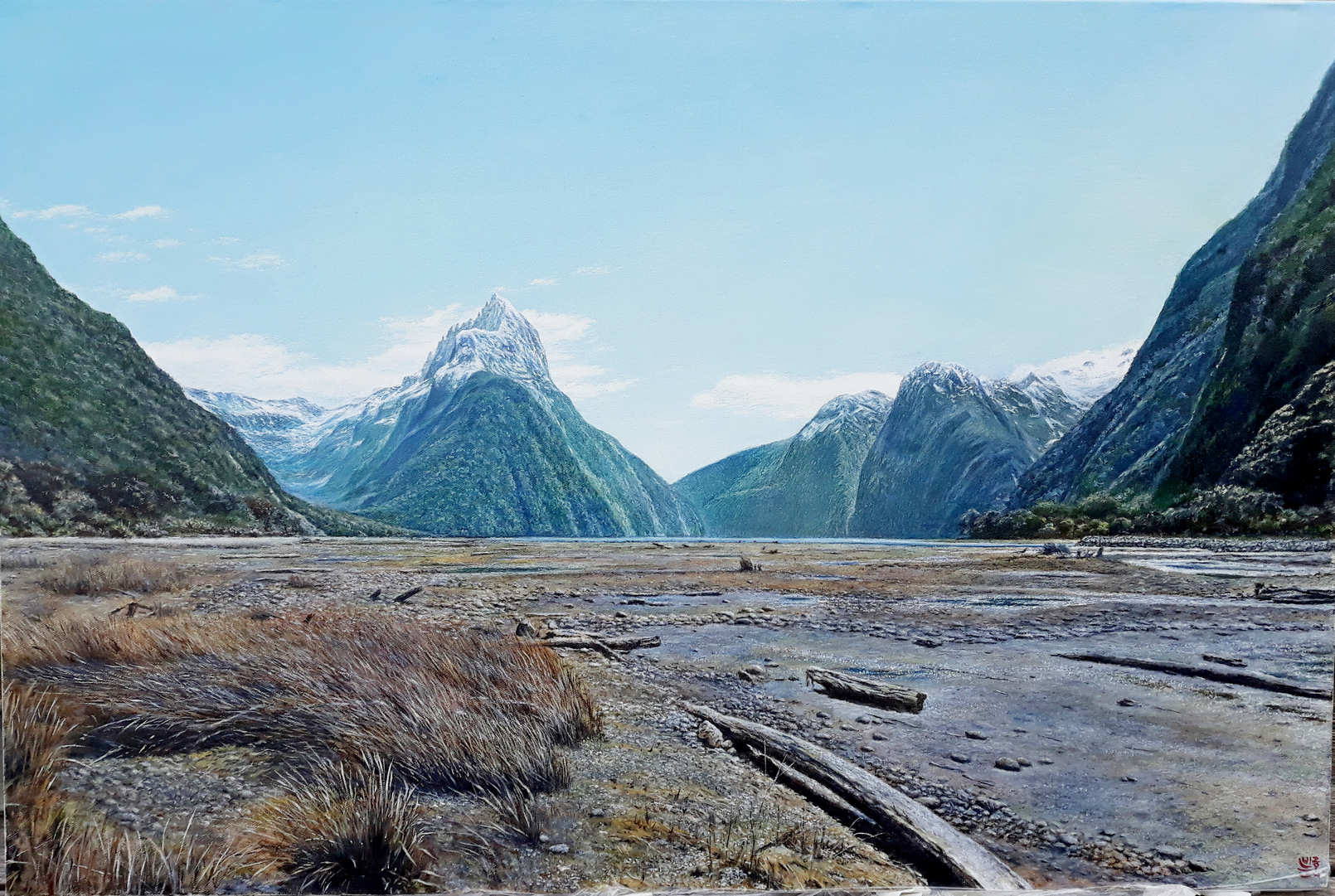
On the way to Glenorchy

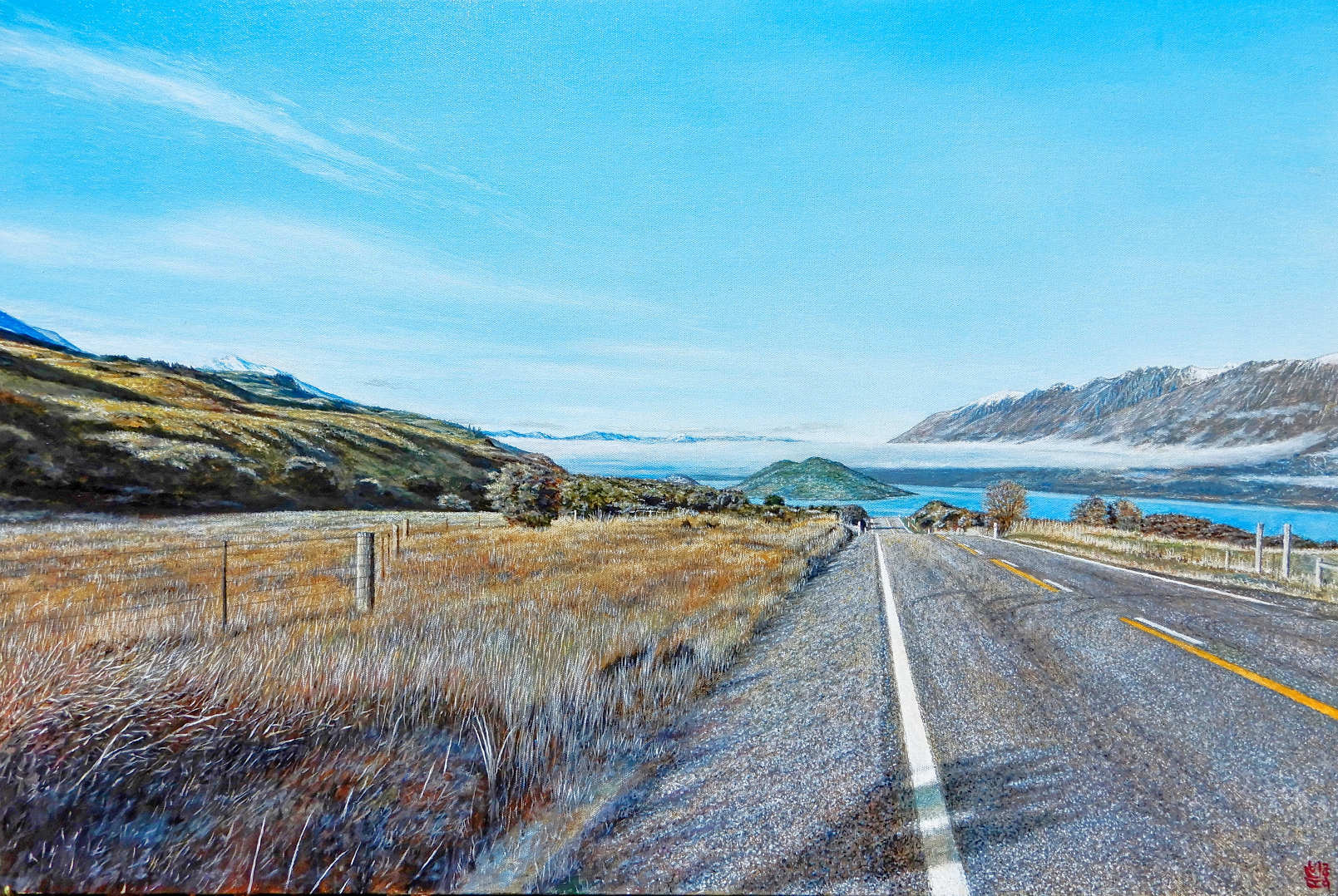
90 x 60 cm / Oil / Canvas

There is a particular kind of freedom that only comes when you are truly alone on the road—a silence so profound it becomes a language of its own. Looking back at this piece, I am drawn back to the stillness I found on the way to Glenorchy. It wasn’t just the landscape that captivated me—the way the afternoon light stretched across the valley and the distant mountains whispered in the quiet—but the feeling of being a traveler with no destination in mind, only the road unfolding ahead.

In the painting, the long, stretched-out cloud resting serenely along the mountain range reminds me of the essence of this land—the ‘Aotearoa,’ the Land of the Long White Cloud. That singular cloud feels like a silent guardian of the peaks, adding a touch of legendary serenity to the scene. I remember the sharp, crisp air of that day and the vastness of the space around me; it was a quiet solitude that felt more like an invitation than an absence of company.

I often revisit this moment in my mind, a time when the world felt boundless and I was simply a guest passing through. It captures a fleeting breath of time where the weight of life was replaced by the light. The brushstrokes still seem to carry the warmth of that afternoon, reminding me that even when the journey is solitary, the beauty we encounter along the way is enough to make us feel entirely, beautifully free.

Cromwell, in the Low Clouds

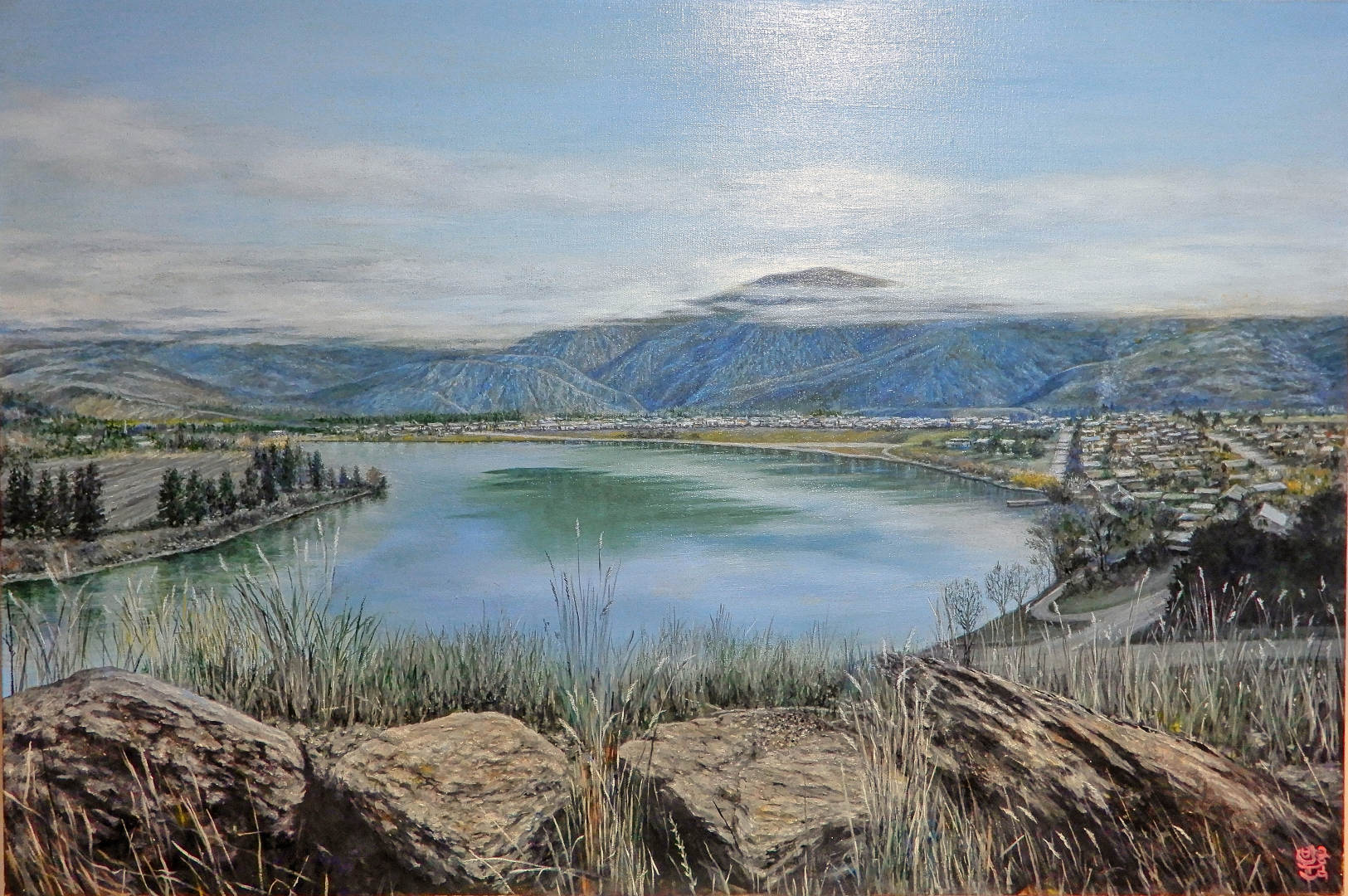
90 x 60 cm / Oil / Canvas

Every time I visited Queenstown from Dunedin, Cromwell was always my stop. Before reaching Cromwell, there is a small bridge — and I always pull over there. You have to get out of the car. It is the most beautiful vantage point to take in the view.

That day, the clouds had descended low, hanging heavy and slow across the valley. The air felt thick with something unspoken — the kind of quiet that makes you want to paint. So I did.

The lake stretches out in the middle distance, its surface holding the light like a mirror made of glass and memory. On the left, the orchards and vineyards line the shore; on the right, the small town of Cromwell sprawls gently. And above it all, the mountains rise in layers — pale blue ridges stacking one behind the other, until the eye finds that flat-topped peak standing alone in the center, a landmark that feels like the spine of the landscape.

In the foreground, the rocks sit heavy and weathered. The grasses bend with the wind, catching the light in their tips. I painted the rocks with care — every crack, every shadow, every rough edge. I wanted the viewer to feel the weight of stone beneath their feet.

The feeling of this painting is solitude, but not loneliness. It is the solitude of someone who has found a place that feels like home, even if only for a moment. The clouds are low, the water is calm, and the town below is small and peaceful — smaller than most places, quieter, as if the world itself has decided to slow down here.

I think the painting is not really about Cromwell. It is about that moment when you stop, when you step out of the car, when you look at the view and realize — this is why you came. This is the place that waits for you.

That is Cromwell. That is the bridge before the bridge. That is the view I always come back to.

A Quiet Evening, Oaramu

90 x 60 cm / Oil / Canvas

I am standing in front of this painting and the first thing I notice is the sky — it takes up most of the canvas, and the clouds are doing almost all of the work. They move in a long, slow, horizontal rhythm, stretched out from left to right. A thin band of pale light sits low above the trees, just above the horizon — not a sunset, but the light that comes after the day has already let go. A soft yellow-green, almost the color of the last minutes before evening in winter. The day is quietly folding its hands.

The land below is calm. A wide green paddock stretches across the foreground. On the far left, near the trees, one cow grazes alone. In the middle of the field, a small group of three stand close together, heads down, doing their slow cow things. A simple wooden fence runs along the bottom of the painting, and on the right side, a small gate stands open — a small doorway back into the field, waiting for no one in particular.

The trees frame the scene like a quiet audience. A cluster of tall, dark trees gathers on the left, almost like a small crowd leaning in. A row of pines runs along the right side. Between them, in the distance, I can see a few small farm buildings — almost swallowed by the haze, sitting low and quiet on the horizon.

The feeling of the painting is stillness. Not emptiness — the field is full of grass, full of life, full of small presences — but a very quiet end of a long day. The cows don’t know they are being watched. The trees don’t move. Even the clouds look as if they have slowed down on purpose, so they can stay a little longer.

I think the painting is not really about the farm. It is about that one thin moment when the day changes — when light becomes memory — and everything in the world seems to hold its breath for a second before night comes.

That is Oaramu in the evening. That is the South Island, holding its breath with me.