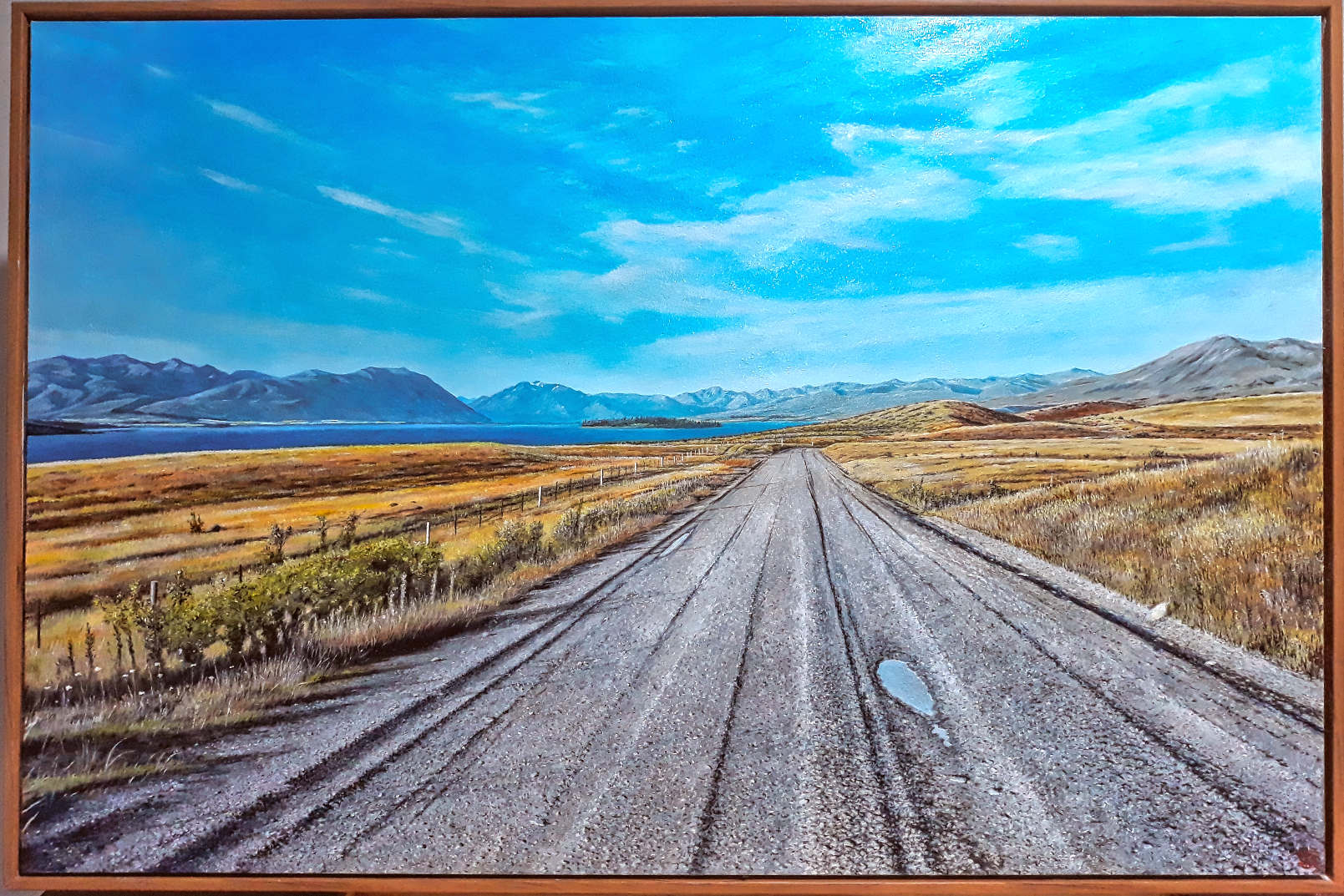
A Road to Contemplation: Tekapo’s Stillness

Oil Painting – 87.5 x 58 cm

This oil painting captures the serene beauty of a remote spot near Tekapo Lake, where the road stretches endlessly without a trace of pavement, and the solitude is palpable. As I ventured through this desolate landscape in my car, I found myself completely alone, surrounded by the vivid blue sky and ever-shifting clouds. The image is imbued with a sense of quietude, with only a charming puddle on the unpaved road serving as a reminder of the natural world’s gentle presence.

In this tranquil setting, I couldn’t help but be reminded of a verse from the Khaggavisana Sutta: A Rhinoceros, which speaks of renouncing violence and the allure of solitude. The line “Go Alone Like A Rhinoceros’ Horn” resonated deeply with my experience as I wandered through this untouched landscape, free from the distractions of modern life. The painting captures the essence of solitude and the beauty of a solitary journey, encouraging us to embrace moments of quiet contemplation and self-discovery.

Renouncing violence
for all living beings,
harming not even a one,
you would not wish for offspring,
so how a companion?
Wander alone
like a rhinoceros.

For a sociable person
there are allurements;
on the heels of allurement, this pain.
Seeing allurement’s drawback,
wander alone
like a rhinoceros.

One whose mind
is enmeshed in sympathy
for friends & companions,
neglects the true goal.
Seeing this danger in intimacy,
wander alone
like a rhinoceros.

– from Khaggavisana Sutta: A Rhinoceros
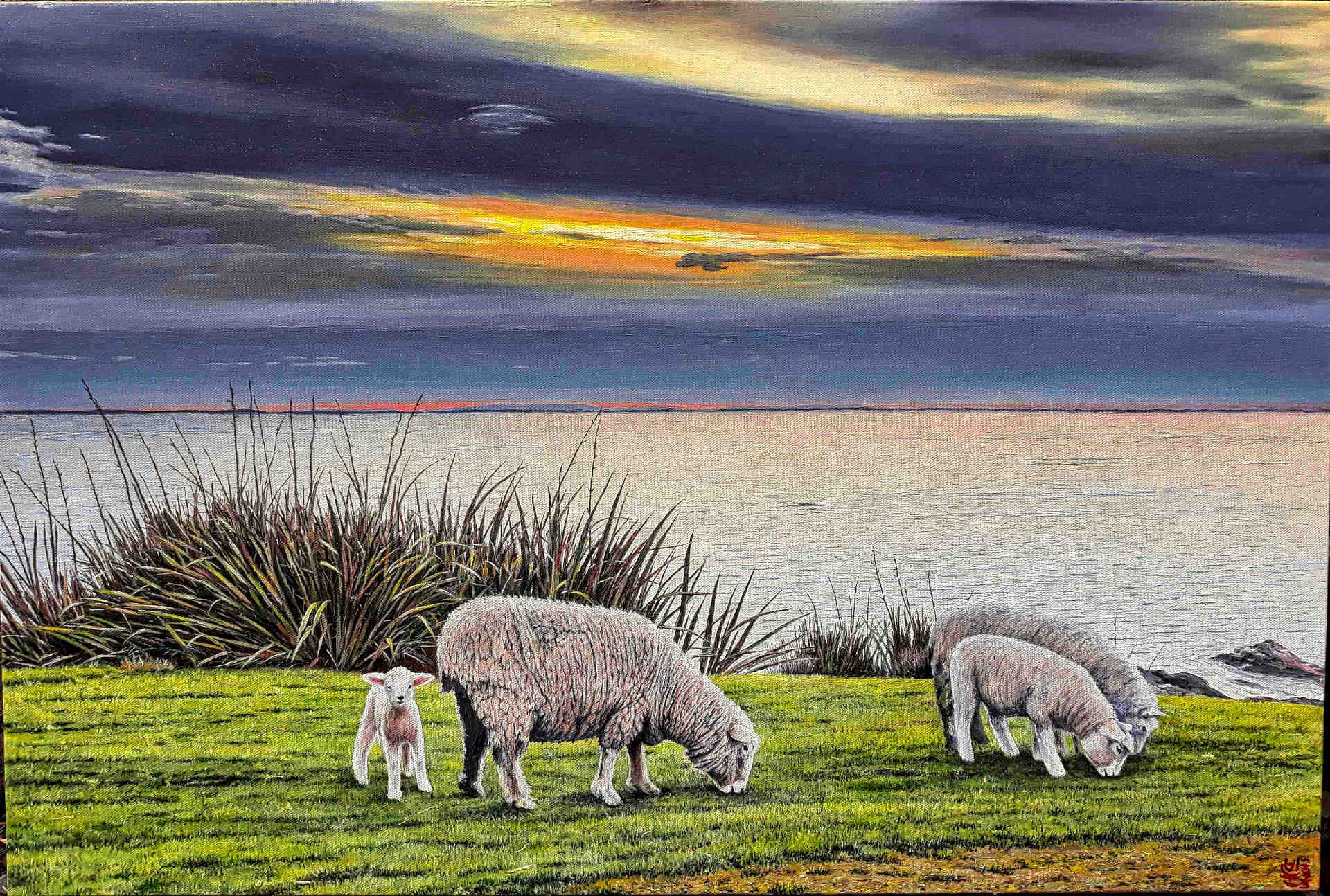
Family Outing at Dusk

Oil / 76 x 50.5 cm / Canvas

A small park by Riverton, South Island. I pass through here every time I travel to Te Anau — there’s a bench, the water, and usually a few sheep wandering the paddock behind.

This evening, a family came out to graze as dusk settled. A ewe and her lamb on the left, another ewe with her lamb on the right. Four of them, unhurried, moving through the grass as if nothing in the world could disturb them.

The smallest lamb stands apart from the others, looking out. Not grazing, not following — just standing there, watching, as if the whole world is still new to him. He doesn’t know what the sky is about to do. He doesn’t need to.

Above them the sky did what it often does in Southland — storm and sunset sharing the same clouds, pink light spilling across the water and into the field. The sheep don’t notice. They just eat.

I almost called this painting Innocence. I didn’t. But it’s still there — in the way the lamb stands, in the way the grass holds them, in the way the evening light falls on all four of them equally, as if nothing has happened yet.

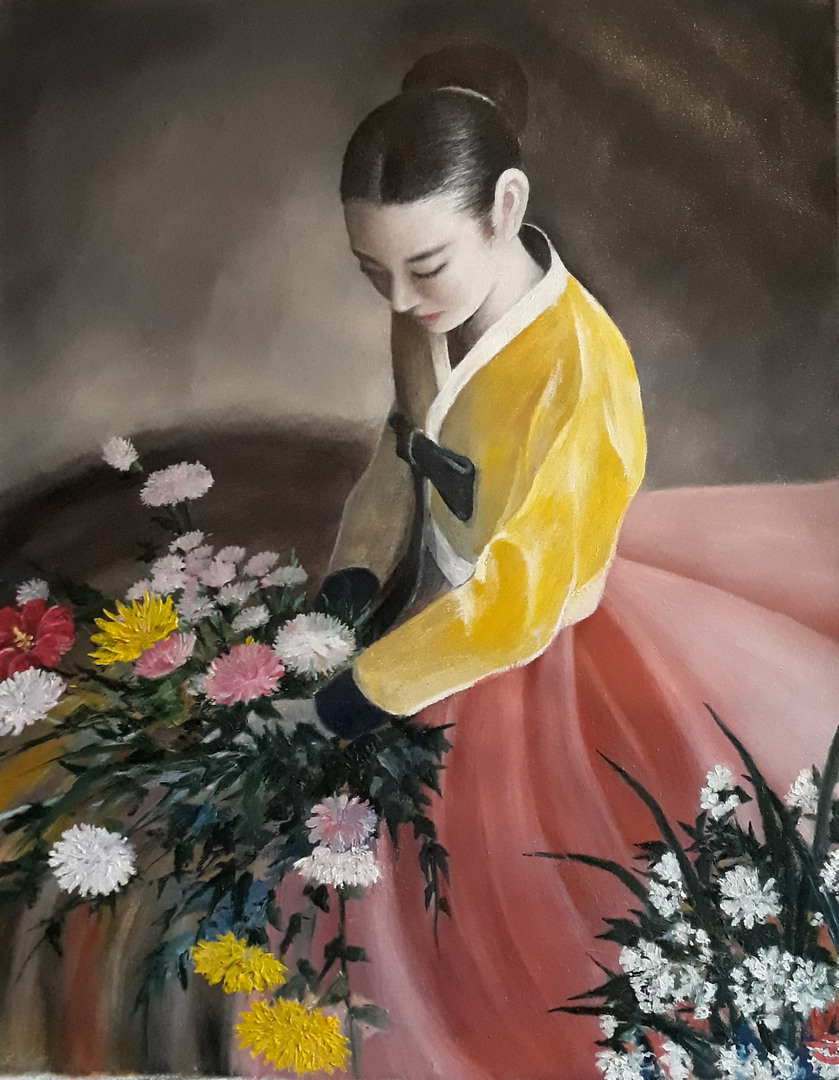
A lady in Korean traditional clothes 

The Colours I Paint

A young woman in a yellow jeogori and pink chima bends over a great bouquet of flowers. She does not look up. Her face is soft, private, absorbed. The flowers — chrysanthemums in white, pink, yellow, and red — spill across her arms like a waterfall of colour. She holds them with the care of someone who knows that beauty is fragile.

The inspiration came from a photograph I took myself while attending a relative’s wedding back in Korea. When I brought that moment to the canvas, I rendered the hanbok with the tenderness of someone who truly remembers what these colours mean — not as a traditional costume, but as living memory. For me, the yellow is the colour of autumn chrysanthemums, of old family photographs, of mothers and grandmothers. The pink is not merely decorative; it is alive and flowing, as if the fabric itself is breathing.

I made the background dark, almost a void. There is no room, no garden, no context. Only the woman and her flowers emerge from the shadow like a figure from a dream. This was deliberate. I wanted to strip away everything except what truly matters: the quiet act of holding beauty, and the calm dignity of a woman who does not need an audience to be beautiful.

There is something deeply Korean about this piece that goes beyond the clothing itself. It captures the way Korean women have always carried beauty — not for display, but as an inherent act of grace. In my painting, she does not pose. She tends. She arranges. She holds the flowers as if they might break, and in doing so, she becomes more beautiful than any of them.